
Heritage Video Production For Museums And Places
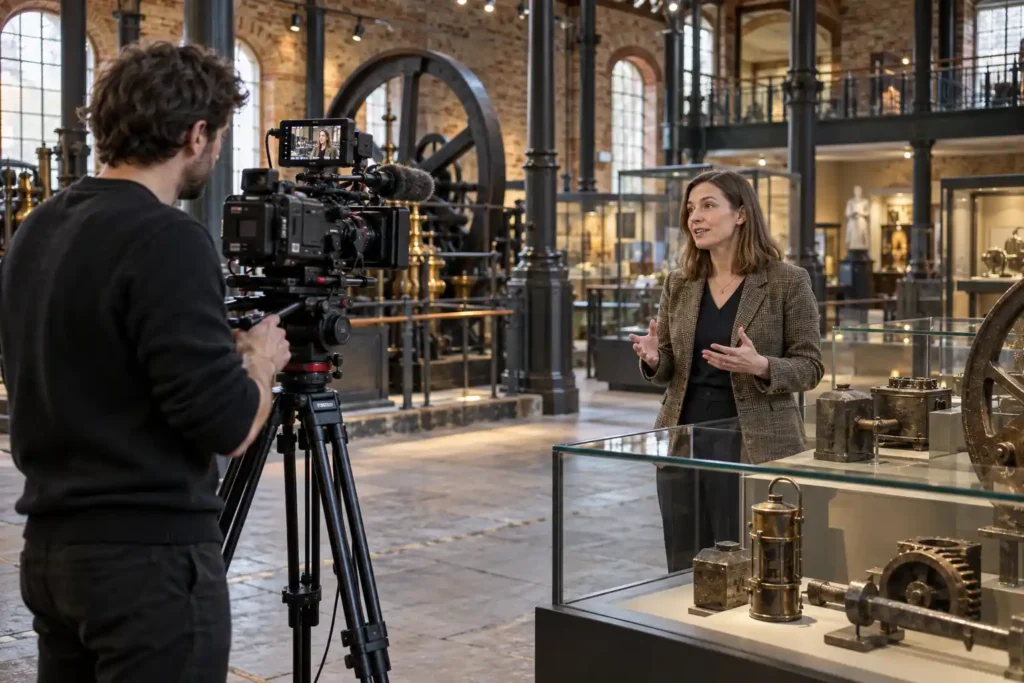
Heritage video production turns historic assets into visual narratives that modern audiences will actually watch. Museums, tourist boards and civic authorities hold rich collections. Much of it sits unseen in storage or in print-only archives. Film moves that material onto screens, websites and gallery displays. Done well, it protects collective memory and lifts regional footfall.
Commissioning teams face a harder brief than most commercial clients. Fragile artefacts, listed buildings and community sensitivities all constrain the shoot. So how do cultural organisations deliver compelling, compliant films that respect community narratives and protect curatorial integrity?
Key Takeaways
- Heritage video production converts fragile assets and oral testimonies into durable digital resources that outlast the original material.
- Modern cinematography sits alongside restored stills only when colour grading and aspect ratios respect the original source format.
- Oral history filming demands sensitive interviewing, informed consent and a lawful basis recorded under UK GDPR.
- Commercial drone work over heritage structures requires CAA authorisation, operational risk assessment and written landowner permission.
- Well-made films drive regional tourism footfall and support place-making programmes long after the launch campaign ends.
Strategic Frameworks for Cultural Screen Assets
Cultural screen assets must satisfy two masters. Curators want historical rigour. Marketing teams want audience reach. In practice, we find the two rarely conflict once the production stages are mapped out properly. Each phase carries its own curatorial priority and its own operational risk. Naming both at the outset prevents expensive rework later.
The table below sets out the five stages of a typical heritage commission. It pairs the curatorial focus of each stage with the risk most likely to derail it. Museum curators, tourism directors and local authority officers can use it as a planning checklist. It also gives steering groups a shared vocabulary for review meetings.
| Production Phase | Core Curatorial Focus | Key Operational Risk |
|---|---|---|
| Strategic Discovery | Audience mapping and institutional narrative alignment | Scope drift and ambiguous messaging priorities |
| Pre-Production | Rights clearance and archival asset verification | Copyright infringement and missing contributor releases |
| On-Site Filming | Collection safety and light exposure control | Accidental physical damage to historic fabric |
| Drone Operations | Aerial landscape context and architectural scale | Civil Aviation Authority airspace non-compliance |
| Post-Production | Colour balancing new footage with historic media | Visual incoherence and historical inaccuracy |

Contemporary Cinematography Alongside Archival Assets
Visual Harmony Across Differing Media Formats
Modern digital sensors capture detail that overwhelms aged photographic stills. Disciplined colour grading closes that gap. The aim is not to make archive footage look new. It is to stop new footage looking alien beside it. We grade the contemporary material down towards the tonal range of the historic source.
Aspect ratio matters just as much. Stretching a Victorian plate photograph to fill a 16:9 frame destroys its composition. Letterbox it instead, or set it within a designed frame. Slow, controlled moves across the still keep the sequence alive. The patina of the original stays visible, and the finished film still meets broadcast delivery standards.
Technical Workflows for Fragile Historical Media
Digitisation must not damage the source. Calibrated flatbed scanners, medium-format copy cameras and cold LED arrays capture deep texture without heat. Glass plates, nitrate reels and foxed paper each need a different handling protocol. From experience across the sector, the conservation officer should sign off the capture method before any asset leaves its store.
Restoration comes after capture, never during it. Software cleans surface dust, corrects chemical fading and repairs tearing on the digital copy. The original file is archived untouched. Every asset is catalogued with provenance, original dimensions and accession number. That metadata discipline speeds up legal sign-off and leaves the institution with an orderly repository it can reuse.
Oral Histories and Academic Contributor Management
Testimony from Non-Media-Trained Contributors
Most contributors to a heritage film have never faced a camera. They are mill workers, dockers, congregation members and retired teachers. Performance is not the goal; accuracy and dignity are. In practice, we find that an unhurried room and a discreet microphone yield better testimony. A tight shooting schedule does the opposite.
Interview structure should guide, never lead. Open prompts anchored to a place or a date recover more detail than direct questions about feelings. Some material will be difficult. Industrial closures, bereavement and displacement come up often in regional heritage work. Edit responses in fair context and keep regional terminology intact. Never cut a testimony into something the speaker did not mean.
Academic Verification and Scholarly Context
Personal memory needs a factual frame around it. Independent historians, senior curators and university specialists supply that frame. They place a single mill closure inside a regional economic shift. Their involvement also reassures funders and education audiences. Grant panels increasingly ask who verified the historical content before they release the next tranche.
Brief academic contributors properly. Tell them the audience, the run-time and the exact claim you need addressed. Verify dates, terminology and archival attributions during pre-production, not in the edit suite. Corrections at that stage are expensive. A peer-review mindset costs a few days early on and protects the institution’s reputation for the life of the film.
Did You Know?
Under the Data Protection Act 2018, the Information Commissioner’s Office can fine an organisation up to £17.5 million. The alternative ceiling is 4% of annual worldwide turnover, whichever is higher. Recorded oral testimony counts as personal data, so consent records are not optional paperwork.
Aerial Filming Over Heritage Sites and Landscapes
Flight Permissions and Airspace Regulations
Commercial drone work over a heritage site is a regulated aviation activity. The pilot needs a valid CAA competency certificate and current public liability insurance. An operational risk assessment must exist before the first flight. Commissioning bodies should ask for all three documents. Checking accreditation after the shoot is far too late.
Urban heritage adds complications. Flight restriction zones, railway corridors and busy pedestrian areas all narrow the options. Production managers coordinate with the local film office, the council and the landowner for take-off and landing consent. Ground permits are separate from airspace permissions. Both must be in place, or the aerial sequence simply will not be shot.
Environmental Protection and Structural Safeguards
Rotor downwash is the risk most commissioners overlook. It can dislodge loose masonry on a listed parapet. It can also flush nesting birds from a ruined tower. Many UK heritage sites host protected species. Standoff distances, planned take-off points and conservative flight paths keep the airframe well clear of fragile stonework.
A pre-flight survey should record structural weak points, nesting habitats and likely radio interference. Industrial neighbours and overhead lines both cause problems. Pilots then map routes with built-in margins and avoid aggressive manoeuvres near unstable masonry. Where a site holds a Site of Special Scientific Interest designation, seasonal restrictions on nesting periods may apply. Plan the shoot around them.
Commercial Advertising
Cinematic & High-Impact
We produce high-gloss TV commercials and digital campaigns designed to captivate and convert. Our team manages the entire creative journey, from storyboard to broadcast, ensuring your brand message is delivered with world-class production values that cut through the noise.
Ethical Safeguards, Rights Clearances and Contributor Consent
Archival Rights and Historic Intellectual Property
Rights clearance is the single most common cause of delay on heritage commissions. Private collections, press photography and vintage newsreel all carry separate ownership. Unclear title exposes the institution to infringement claims and platform takedowns. Trace the rights holder, the estate executor or the picture library early. Clearance takes weeks, not days.
Keep a rights ledger for every production. Record the licensor, the territory, the permitted platforms and the expiry date. Orphan works need a documented diligent search before use. The Intellectual Property Office operates a licensing scheme for exactly this situation. A complete ledger means the finished film can screen publicly without a rights dispute surfacing later.
Ethical Consent and Community Safeguarding
A generic commercial release form is not adequate consent for community testimony. Contributors need to know where their words will appear. That includes the gallery screen, the website, social channels and any future broadcast licence. Write the consent form in plain English. Tell people they can withdraw, and explain what withdrawal actually means.
Filming children or vulnerable adults in a heritage setting triggers the institution’s safeguarding policy. Secure written consent from a parent, guardian or legal custodian before the call sheet goes out. A nominated safeguarding lead should be present on site. Personal data obligations continue after delivery. Store recordings securely, honour retention periods, and answer subject access requests promptly.
Production Support
Regional Crew & Logistics
We act as a trusted “boots on the ground” partner for international agencies and broadcasters filming in the North. We provide elite-level crew hire, location logistics, and technical support to ensure your UK production runs seamlessly.
Place-Based Narratives for Civic Tourism and Regeneration
Cultural Heritage as Community Identity
Place-making films fail when they show only the new build. Residents recognise the omission immediately. Industrial heritage, chapel culture, market trading and local craft are what people actually identify with. Put those on screen first. The regeneration scheme then reads as continuity rather than replacement, which is a far easier message to sell locally.
Civic storytelling links an old trade to a new public square. It links a closed works to the cultural quarter built on the site. That link builds pride, and pride improves public consultation outcomes. Councils running contentious schemes see fewer objections when heritage is visibly respected. New residents also gain a route into the town’s history.
Regional Footfall and Tourism Economies
Heritage video production works as an economic instrument, not just a cultural one. Cinematic coverage of historic quarters, museums and preserved railways converts browsers into overnight visitors. Overnight stays are where regional tourism spend concentrates. Film also pulls attention away from the three or four landmarks that absorb most national visitor numbers.
Cut the master film down for distribution. Short vertical edits for social, a sixty-second trailer for paid media, and a full version for the website. Each cut-down should point to a booking system or an events listing. Coordinate release with the regional tourism board rather than publishing in isolation. Joint campaigns reach audiences a single institution cannot.
Corporate & Brand
Strategic Storytelling
We craft intelligent brand documentaries and corporate films for global organisations. Moving beyond standard interviews, we use authentic, broadcast-quality storytelling to communicate complex values to investors, stakeholders, and internal teams.
Curatorial Narrative Design for Museum Exhibition Spaces
Screen Dynamics for Gallery Visitors
Gallery screens are not cinema screens. Visitors arrive mid-sequence, watch for ninety seconds and move on. The narrative must therefore be modular and self-contained. Any thirty-second slice should still make sense on its own. We build gallery edits as loops with clear entry points rather than as a single linear story.
Sound is the other constraint. Audio spill between galleries irritates visitors and invigilators alike. Directional speakers, hypersonic arrays or handset points contain it. Typography needs to be legible from four metres, not from a desktop monitor. Caption every film: it serves hearing-impaired visitors and anyone standing in a noisy room.
Interactive Displays and Long-Term Digital Archives
Passive projection is only one layer. Touch tables, searchable archives and headphone points let visitors go deeper when they want to. A casual visitor watches the three-minute film. A local historian opens the unedited forty-minute testimony behind it. One hardware installation serves both audiences without compromising either experience.
Specify the archive deliverable in the contract, not after delivery. Ask for graded masters, raw rushes, transcripts and a documented folder structure. Use open, future-proof formats so in-house teams can update displays themselves. Interactive content ages faster than the exhibits around it. An institution that holds its own assets can refresh a display without recommissioning the whole production.
Business Video Production
Multi-Channel Asset Suites
At Paper Films, we produce cinematic, commercially-focused corporate video for businesses across the UK. From national manufacturers to specialist SMEs, we create content designed to deliver results across every channel your business uses. Build Trust. Strengthen Your Brand. Create Content That Works Harder.
Commercial Commissioning and Institutional Accountability
Multi-Stakeholder Approval Frameworks in Public Projects
Public heritage commissions carry more approvers than commercial work. Curators, council officers, funders and community representatives all hold a view. Agree the governance map before production starts. Name who signs off factual accuracy, who signs off creative direction and who signs off legal compliance. Ambiguity here produces expensive edit rebuilds.
Structured review rounds keep feedback focused on agreed objectives. Two rounds at rough cut and one at fine cut usually suffices. This discipline underpins heritage and archive documentary production for museums tourism and place-making organisations in the UK. Open dialogue between the director and the steering committee prevents contradictory notes. It also keeps the delivery date intact.
Social Return and Audience Engagement Metrics
Public money requires evidence of return. Track digital dwell time, completion rate, in-person visitor numbers and screening attendance from launch. Set the baseline before release, otherwise the figures prove nothing. Funders increasingly ask for social value measurement alongside reach. Agree the metrics with the funder at commissioning stage, not at the final report.
Reach is only part of the picture. Educational adoption, community feedback and regional media coverage all signal cultural impact. Assets repurposed for schools programmes, outreach events and fundraising extend value for years. In our experience, the films that keep working are the ones commissioned with reuse in mind. Build that into the brief.
Talk to Us About Your Project
If your business is looking for a strategic video production partner to support marketing, recruitment, communications or brand growth, we’d like to hear about your project.
We work with businesses at every scale — from single flagship films to ongoing content partnerships. Every conversation starts with understanding your objectives, not selling you a package.
Final Thoughts
Heritage video production succeeds when creative ambition sits inside real constraints. Fragile assets, airspace rules, copyright and community consent all shape what can be filmed. None of that has to flatten the work. The best cultural films acknowledge their limits and turn them into a distinctive visual approach.
Exhibition technology will keep changing. Verified content, clean rights and well-catalogued assets will outlast every display format it appears on. Institutions that commission with the archive in mind protect their investment twice over. The collection stays visible, and the next generation inherits something they can still use.
Frequently Asked Questions
A:
You will usually need written permission from the property owner, trust or local council. Public land normally requires a permit arranged through the regional film office. Expect to supply a risk assessment and proof of public liability insurance. Cover of £5 million is a common minimum, though some sites ask for £10 million. Listed buildings and sensitive urban centres may also require traffic management plans and conservation consent. Allow several weeks for all of it.
A:
Start by identifying the owner. That may be a photographic library, an estate executor, a broadcaster or a private collector. The licence must name the distribution channels, the territories and the screening period you need. If the owner cannot be traced after a documented diligent search, the work may qualify as an orphan work. The Intellectual Property Office runs a licensing scheme for those cases. Record every licence in a rights ledger.
A:
The Civil Aviation Authority regulates all commercial drone work in UK airspace. Pilots need the appropriate competency certificate and the drone must be registered. Flights near crowds, public events or congested areas require specific CAA authorisation. You also need written landowner consent for take-off and landing, which is separate from airspace permission. Keep a safe standoff from ancient masonry to avoid downwash damage. Nesting seasons may restrict flying at some sites.
A:
Grade the modern footage towards the archive, not the other way round. Matching the tonal range and contrast of the historic material stops the new footage looking clinical. Keep the original aspect ratio of stills and vintage reels. Letterboxing or a designed frame works better than cropping. Add slow, controlled movement across stills so they hold attention beside live action. The result reads as one film rather than two stitched together.
A:
A recorded voice and face are personal data under UK GDPR and the Data Protection Act 2018. The institution needs a lawful basis for recording, editing and publishing that material. Consent is the usual route for community testimony. The form should state plainly where the film will appear and for how long. Contributors can ask to see their data or to withdraw. Clear records make those requests straightforward to answer.
heritage video production
archive documentary film
heritage video production
archive documentary film
heritage video production
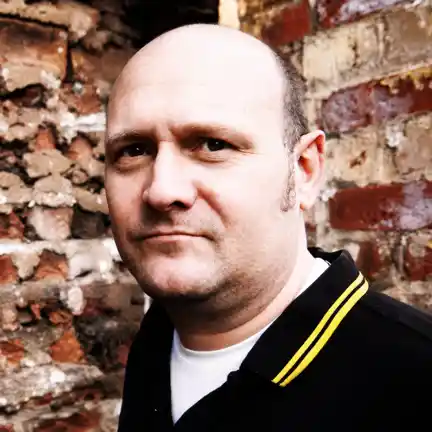
About The Author
Daniel founded Paper Films in Manchester over twenty years ago and continues to direct on every flagship project. He has built a reputation for translating complex B2B propositions into cinematic, commercially-focused films for organisations including BCN, Lancaster City Council and BAE Systems. Daniel’s direct involvement is built into every brief — strategy, scripting, on-set direction and final edit — so the work never passes to a junior team.
