

Film Crew Hire Manchester For Agency Shoots
Commercial production in the North West demands technical certainty and dependable local personnel. Creative directors planning shoots outside London face a straightforward decision. Booking film crew hire Manchester services protects production values and removes avoidable overheads. Moving a full southern unit north adds accommodation bills, travel delays and carbon cost. Regional operators already know the city’s shooting environments, its shifting light and its noise problems.
External production companies rarely have time to vet northern technicians from a distance. Trust, compliance and on-set discipline all have to be assumed rather than checked. How can London agencies and broadcasters secure broadcast-calibre crews across Greater Manchester without losing control?
Key Takeaways
- Regional technical crews cut travel and accommodation costs whilst bringing instant familiarity with filming locations across Greater Manchester.
- Screen Manchester coordinates municipal filming permissions and requires risk assessments plus at least five million pounds of public liability cover.
- Local production support differs from crew hire by adding logistics, equipment sourcing, permit coordination and on-site problem solving.
- Professional regional crews act as discreet extensions of the commissioning agency, protecting client relationships through confidentiality and brand alignment.
- Dedicated specialists such as directors of photography and gaffers deliver far better lighting and acoustic control than solo operators.
Regional Crew Capabilities for Agency Shoots
High-end commercial video depends on balanced technical departments matched to the creative brief. Some agency shoots need only a lean camera unit. Complex brand campaigns need specialist lighting, dedicated sound recording and active location management. Choosing the right crew structure protects both production efficiency and budget control from the first scouting day onwards.
The table below sets out the standard crew roles used on Greater Manchester commercial shoots. It lists what each role does on set. It also lists the regulatory or logistical requirement that role exists to cover. Production managers can use it to scope regional requirements accurately before any personnel are booked.
| Technical Role | Core Operational Responsibilities | Compliance and Logistical Requirements |
|---|---|---|
| Director of Photography | Visual framing, camera operation, lens selection, lighting design | Camera kit transit, location scouting, shot scheduling |
| Sound Recordist | Multi-channel audio capture, boom operation, wireless lavalier placement | Radio frequency licensing, noise assessment, acoustic dampening |
| Gaffer and Spark | Lighting rig assembly, power distribution, circuit safety | Electrical safety checks, cable management, RAMS adherence |
| Location Manager | Site access, unit base logistics, council liaison | Screen Manchester permits, parking suspensions, road notices |
| Production Manager | Daily scheduling, crew coordination, client communication | Health and safety compliance, call sheets, GDPR signage |
| Drone Operator | Aerial cinematography, overhead tracking shots | CAA certification, airspace clearance, pedestrian safety zones |

Cost and Efficiency Gains From Regional Crew Booking
Overhead Reduction for Southern Agencies
Sending a production crew from London to the North West inflates a budget before filming starts. Local camera, lighting and sound technicians remove mileage claims, hotel bookings and daily subsistence. That single adjustment frees real money. Agencies can redirect it straight into on-screen production value instead of logistics.
Travel fatigue is an operational hazard as well as a cost. Technicians who drive for several hours arrive late and arrive tired. Call times slip. Safety risk rises. Regional crews turn up fresh and punctual. Local booking also simplifies pickups and reshoots. Rather than funding a second trip north, agencies mobilise the same technicians within a day.
Local Geographic and Environmental Expertise
Manchester has architectural and geographic conditions that shape lighting, camera position and acoustics. Local technicians know how fast northern weather changes exterior light in Castlefield or Ancoats. That familiarity produces accurate scheduling. It accounts for sun paths between tall developments and for acoustic conditions close to transit lines.
This knowledge prevents expensive scheduling errors on the day. An experienced Manchester camera crew knows which city centre locations suffer reverberation from passing Metrolink trams. They know when footfall peaks in St Peter’s Square and Piccadilly Gardens. In practice, we find these variables are settled in pre-production. The shooting rhythm then holds, and the agency’s shot list survives intact.
Did You Know?
Screen Manchester requires commercial filming applications on council-owned land to evidence at least £5 million of public liability insurance, supported by a written risk assessment. Higher thresholds apply to major city-centre squares and to shoots that disrupt the highway.
Core Technical Roles for Broadcast and Commercial Shoots
Cinematography and Lighting Departments
High-tier commercial campaigns separate camera operation from lighting management. A dedicated director of photography works alongside a professional gaffer. Together they shape each scene deliberately rather than settling for ambient light. That split creates consistent corporate branding. It also produces footage that survives strict broadcast quality control.
Gaffers and sparks manage power distribution safely. They run distribution boards and cables without endangering pedestrians or client staff. They also carry specialist fixtures, diffusion and negative fill. Those tools turn an ordinary corporate office into a cinematic set. Freed from lighting duties, the director of photography concentrates on composition, lens choice, exposure and camera movement.
Sound Engineering and Dialogue Capture
Clean dialogue separates commercial-grade video from amateur corporate content. Professional sound recordists work with multi-track field recorders, directional booms and calibrated wireless lavaliers. They monitor acoustic balance continuously throughout the day. Industrial hum and air conditioning noise are suppressed at source rather than left for post-production.
Camera-mounted microphones regularly fail broadcast quality control. Phase problems, room reflections and transient noise are the usual causes. A dedicated sound engineer hears those faults immediately. Retakes happen before the set is struck. The engineer also captures room tone and wild tracks. Post-production teams then receive clean stems, which cuts audio repair time sharply.
Commercial Advertising
Cinematic & High-Impact
We produce high-gloss TV commercials and digital campaigns designed to captivate and convert. Our team manages the entire creative journey, from storyboard to broadcast, ensuring your brand message is delivered with world-class production values that cut through the noise.
Municipal Permits and Location Logistics in Manchester
Screen Manchester Coordination and Public Spaces
Commercial filming on Manchester streets, pavements and public parks needs formal authorisation. Screen Manchester acts as the film office for Manchester City Council. It assesses applications, verifies insurance cover and liaises with highways teams. Permits secured in advance stop enforcement officers or police halting a shoot mid-morning.
A permit becomes essential once equipment sits on the pavement. Tripods, lighting stands and tracking dollies all qualify. Screen Manchester also assesses pedestrian risk where actors, staged action or trailing cables are involved. Applications submitted early clear faster. That matters for civic locations such as the Town Hall surrounds, Cutting Room Square and the Castlefield canal basin.
Highways, Traffic Control, and Transport Hubs
Filming on live highways introduces safety issues that need multi-agency planning. Transport for Greater Manchester oversees regional transport assets. It expects advance notification for work near tram stops, bus interchanges and busy transit corridors. Proper coordination protects the public and keeps unit vehicles within local traffic law.
Some scripts demand road closures, rolling roadblocks or parking suspensions for technical vehicles. Local logistics partners handle the statutory notifications. Highways departments usually want ten to twenty working days to approve a traffic management scheme. From experience across the sector, that lead time is rarely negotiable. Local production managers also secure unit base parking near the location.
Production Support
Regional Crew & Logistics
We act as a trusted “boots on the ground” partner for international agencies and broadcasters filming in the North. We provide elite-level crew hire, location logistics, and technical support to ensure your UK production runs seamlessly.
Health, Safety, and Legal Compliance on Location
Statutory Risk Assessments and Method Statements
The Health and Safety at Work Act requires production companies to identify and control hazards on set. Formal Risk Assessment and Method Statement paperwork records how that is done. It protects crew and public alike. Qualified crew leads then apply those controls rigorously throughout the filming day.
Live environments create specific hazards. Active construction sites, occupied headquarters and busy public areas each behave differently. Crew leads inspect power distribution routes. They secure overhead rigs with secondary safety bonds. They set exclusion zones around working machinery. Following Health and Safety Executive guidance for the entertainment industry prevents accidents and shields agencies from legal liability.
Data Protection and GDPR Signage
Recording identifiable members of the public triggers duties under the UK General Data Protection Regulation. Production teams must establish a lawful basis before filming in public or semi-public spaces. Prominent filming notices are the practical answer. They tell visitors that cameras are active and explain how footage will be used and retained.
Signed appearance releases are needed where individuals feature prominently. Employees of a client company are no exception. Store those consents securely alongside the media assets. Local crew leads also post privacy notices at every access point of a private venue. This discipline protects commissioning brands from later disputes and from Information Commissioner’s Office enforcement.
Corporate & Brand
Strategic Storytelling
We craft intelligent brand documentaries and corporate films for global organisations. Moving beyond standard interviews, we use authentic, broadcast-quality storytelling to communicate complex values to investors, stakeholders, and internal teams.
Discreet Brand Representation for Agency Partners
Seamless Extension of Agency Culture
Hiring a regional crew requires trust that technicians will reflect the agency’s standards on set. Professional local crews work as invisible extensions of a remote creative director. They adopt the tone, decorum and working practices the agency has established. That consistency reinforces client confidence across every production day.
Experienced regional technicians treat agency client relationships as commercial assets. On-set behaviour shapes how a corporate client sees the lead agency. Reputable crew members arrive on time. They keep a tidy equipment footprint. They speak to client stakeholders with care. Visiting brand managers should leave feeling supported, not managed around.
Confidentiality and Intellectual Property Protection
Corporate campaigns and broadcaster projects often involve unreleased products or sensitive internal programmes. Professional crews sign non-disclosure agreements before they reach the location. They then follow strict confidentiality rules on site. That discipline prevents unauthorised photography, leaks and social media exposure ahead of an official launch date.
Information security extends to media cards and digital asset handling. Technicians run dual-card recording as standard. Raw footage is handed over on encrypted drives, verified with checksum software. Control over captured assets stays tight from first take to final handover. Regional crew partners protect brand intellectual property and honour every agreement signed with the agency.
Business Video Production
Multi-Channel Asset Suites
At Paper Films, we produce cinematic, commercially-focused corporate video for businesses across the UK. From national manufacturers to specialist SMEs, we create content designed to deliver results across every channel your business uses. Build Trust. Strengthen Your Brand. Create Content That Works Harder.
Technical Equipment Standards and Kit Redundancy
Broadcast-Approved Camera and Audio Systems
Agencies and national broadcasters expect footage from cinema sensor systems with high-bitrate recording. Wide dynamic range is equally important. Manchester crews supply platforms from ARRI, RED and Sony Cinema Line. Those bodies pair with cinema-grade prime or zoom glass, so new footage matches existing agency assets.
Specification matching matters most on multi-camera setups and regional pickups for national campaigns. Professional crews shoot standardised log colour profiles. They record broadcast-compliant codecs such as ProRes 422 HQ or raw. Remote post-production teams can then grade everything together. Colour clipping, banding and mismatched exposure curves stop appearing across camera feeds.
On-Set Backup Systems and Data Integrity
A technical failure can derail a tight schedule and cost a commissioning agency heavily. Broadcast-calibre crews build redundancy into the workflow. They carry backup camera bodies, duplicate recording media and spare sound receivers. Faults are resolved on the spot, so shooting momentum survives the interruption.
Data management is enforced from the first take. A digital imaging technician or camera assistant offloads cards using checksum-verified software such as ShotPut Pro or Silverstack. Two verified backups are created on separate solid-state drives. No card is wiped before that is complete. Client assets are secure before the unit leaves the location.
Crew Hire Compared to End-to-End Production Support
Isolated Technician Booking Limitations
Booking standalone freelancers supplies a camera operator or a sound recordist. It leaves every logistical burden with the remote agency producer. A lone freelancer may lack the insurance, authority or time to resolve a permitting problem. The producer is then pulled into reactive crisis management from two hundred miles away.
Freelance technicians concentrate on their own craft rather than overall project risk. Wet weather can stop an exterior. A council officer can question pavement obstruction. Few individual freelancers hold the resources to negotiate or to secure an alternative site nearby. The hiring agency absorbs the delay, the liability and the administrative stress.
Comprehensive Production Partnership Advantages
Full production support covers scouting, council liaison, transport planning and technical crewing under one point of accountability. A local partner absorbs the geographic risk. It coordinates each operational detail so agency creatives concentrate on directing client content. That model gives certainty on high-stakes brand shoots where failure is expensive.
Arranging film crew hire Manchester on that basis needs real operational infrastructure. Established Manchester production companies hold working relationships with rental houses, local authorities and studios such as dock10. The partner manages vendor invoices and safety documentation. It also supplies an on-site production manager. A complex regional shoot becomes predictable rather than fragile.
Talk to Us About Your Project
If your business is looking for a strategic video production partner to support marketing, recruitment, communications or brand growth, we’d like to hear about your project.
We work with businesses at every scale — from single flagship films to ongoing content partnerships. Every conversation starts with understanding your objectives, not selling you a package.
Final Thoughts
Delivering commercial and broadcast work across Greater Manchester takes more than equipment. Professional film crew hire Manchester services give southern agencies and broadcasters broadcast-calibre talent who already understand the city. They know its geography, its light and its regulatory landscape. Vetted regional operators remove travel and accommodation overheads without lowering production values.
Regional production continues to expand around MediaCityUK and the wider North West. A reliable local crewing partnership is now a strategic advantage rather than a convenience. Dedicated local technicians keep health and safety compliance tight, permits moving and client representation discreet. With that infrastructure in place, ambitious campaigns land on time, on budget and to broadcast standard.
Frequently Asked Questions
A:
A permit is required whenever commercial production takes place on council-owned land using professional equipment. Tripods, lighting rigs, dollies and cranes all count. A permit is also mandatory if the shoot restricts public access, involves actors, runs cables across pavements or needs road closures and parking suspensions. Screen Manchester coordinates applications for Manchester City Council. Low-impact handheld filming without staging may not always need a full permit. Notifying the film office first is still the safer course.
A:
Commercial filming in public spaces across Greater Manchester normally requires at least £5 million of public liability insurance. That threshold applies when permits are sought through Screen Manchester for council-owned parks, walkways and public squares. High-profile civic locations and complex productions can attract a higher requirement, often up to £10 million. Elevated platforms, heavy vehicles and road closures all push cover upwards. Productions must also submit written risk assessments and method statements before a permit is granted.
A:
Hiring freelancers buys technical labour for a specific role, such as camera operation or sound capture. Logistics, legal duties and location management stay with the commissioning agency. Local production support works differently. The partner handles location scouting, permits through Screen Manchester, equipment sourcing, health and safety documentation and on-site production management. Regional delivery risk sits with that partner rather than the agency. Remote creatives can then focus on creative direction and on their client relationship.
A:
Manchester crews supply broadcast-standard cinema cameras from ARRI, Sony Cinema Line and RED. Bodies are paired with prime or cinema zoom lenses chosen to match the agency's visual style. Audio packages include multi-track field recorders, directional boom microphones and digital wireless radio mics on licensed frequencies. Footage is recorded in industry-standard log colour profiles and high-bitrate codecs such as Apple ProRes 422 HQ or raw. That combination integrates cleanly with remote post-production and grading pipelines.
A:
Experienced commercial crews limit disruption through detailed pre-production planning and a compact equipment footprint. They agree controlled filming zones with Screen Manchester and schedule around off-peak pedestrian hours. Battery-powered lighting removes hazardous cabling from pavements. Clear data protection signage informs the public that filming is under way, satisfying UK GDPR obligations. Location managers and production leads actively manage pedestrian flow. Public safety is maintained and the client's brand reputation is protected throughout.
film crew hire Manchester
Manchester camera crew
film crew hire Manchester
Manchester camera crew
film crew hire Manchester
About The Author
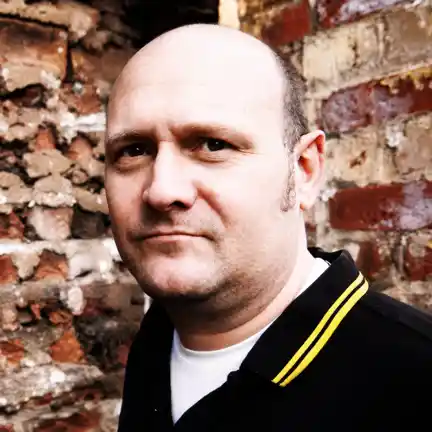
Daniel founded Paper Films in Manchester over twenty years ago and continues to direct on every flagship project. He has built a reputation for translating complex B2B propositions into cinematic, commercially-focused films for organisations including BCN, Lancaster City Council and BAE Systems. Daniel’s direct involvement is built into every brief — strategy, scripting, on-set direction and final edit — so the work never passes to a junior team.
