
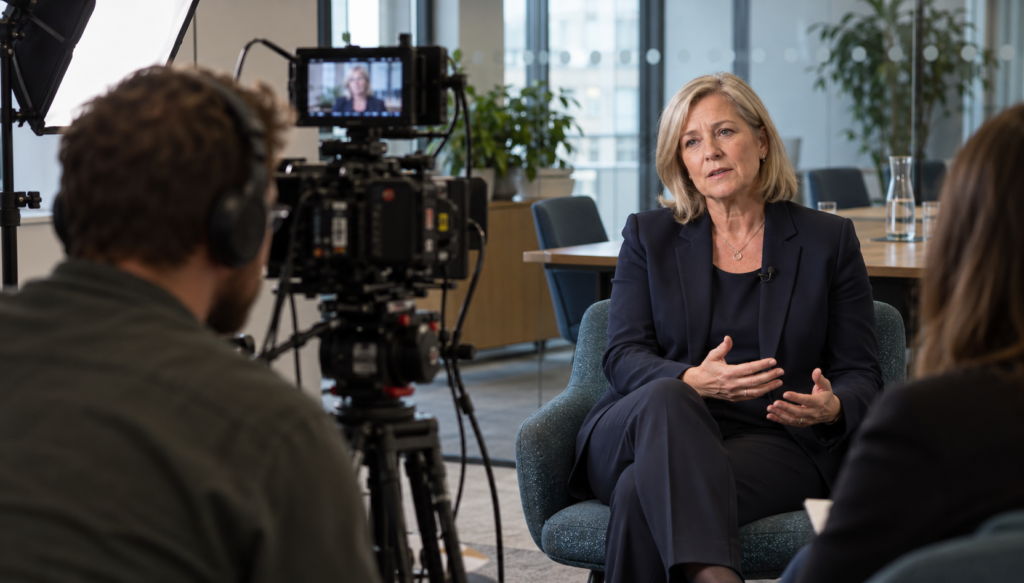
Change Management Video For Internal Buy-In
Large-scale operational shifts often falter when leadership relies exclusively on lengthy slide decks, dense manuals, and cascading memos. A purposeful change management video establishes emotional connection, visual clarity, and strategic alignment during critical transitions. Forward-thinking UK enterprises use broadcast-quality production standards rather than treating media as an afterthought. They translate intricate corporate shifts into accessible narratives that address legitimate workforce concerns directly. This approach builds early momentum and fosters genuine engagement across every operational tier.
Generic corporate broadcasts often breed cynicism among staff during periods of significant upheaval. Strategically produced visual assets provide the transparent context employees require during operational restructuring. When organisations communicate complex initiatives through structured visual media, workforce alignment accelerates significantly. How can senior leaders harness visual assets to replace workplace scepticism with measurable operational commitment across their teams?
Key Takeaways
- Transformation films deliver consistent leadership messaging across multi-site operations, preventing message dilution during enterprise restructuring programmes.
- Modular video libraries equip frontline managers with conversational toolkits that translate executive vision into daily departmental routines.
- Strong internal communication measures workforce comprehension and sentiment shifts rather than superficial intranet view counts.
- Human interviews combined with motion graphics visualise future operational states and clarify phased migration timelines.
- Compliance governance protects workforce trust through statutory data privacy standards and documented consent during internal filming.
Strategic Frameworks for Transformation Communications
Modern workforce communication requires a tiered media framework. It must balance high-level vision with practical workflow instruction. A single sweeping broadcast rarely resolves operational uncertainty inside specific departments. A structured video architecture works harder. Every tier of the workforce then receives appropriate context, emotional reassurance, and detailed execution guidance.
Deploying targeted visual assets at planned project milestones prevents change fatigue. It also reinforces leadership accountability. The table below sets out the core components of an enterprise change visual framework. It shows how distinct production tiers address different audiences, objectives, and delivery channels. This structure secures alignment across the wider corporate ecosystem.
| Production Asset Tier | Primary Audience | Strategic Objective | Format and Channel |
|---|---|---|---|
| Executive Vision Film | Entire Enterprise | Establish strategic context, necessity, and overarching roadmap | Broadcast-style presentation via town hall and intranet |
| Manager Toolkit Modules | People Leaders and Line Managers | Equip team leads with facilitation guidance and talking points | Interactive LMS portal and downloadable briefing packs |
| Departmental Explainer | Operational and Functional Units | Clarify technical workflow adjustments and daily process changes | Short-form hybrid video with motion graphics overlays |
| Milestone Progress Clips | Cross-Functional Teams | Maintain momentum by evidencing early operational successes | Bite-sized mobile-friendly clips and digital newsletter assets |

Executive Leadership Messaging That Connects
Direct Leadership Framing
Executive messaging succeeds only when senior leaders communicate corporate rationale with transparency, empathy, and absolute clarity. Staff instantly spot evasive rhetoric or corporate jargon during restructuring. Leaders must outline commercial drivers honestly. They must explain why remaining static presents far greater risk to the enterprise than embracing immediate operational evolution.
To resonate across the business, senior executives must balance strategic authority with authentic vulnerability. A change management video provides a human face to corporate decision-making. Chief executives build lasting credibility when they directly acknowledge operational hurdles and staffing questions. Clear messaging frameworks ensure leaders remain focused on critical objectives without alienating frontline contributors.
Tone and Delivery Discipline
Broadcast-standard production values elevate internal communications significantly across large organisations. They demonstrate to the workforce that leadership values their time and comprehension. Professional lighting, controlled acoustic environments, and structured treatments signal corporate seriousness. In contrast, haphazard executive communication suggests that the underlying transformation programme lacks rigorous governance and investment.
Maintaining conversational discipline prevents executive monologues from feeling detached or dismissive. Producers must steer contributors away from overly rehearsed statements toward grounded, objective discussion. Incorporating natural pauses, direct eye contact, and sincere explanations makes abstract restructuring programmes tangible. This deliberate balance between polished visual delivery and personal warmth reassures employees during unsettling organisational shifts.
Toolkits for Line Managers
Frontline Facilitator Support
Line managers bear the primary burden of operational change, answering difficult questions and handling everyday workforce anxieties. Providing these leaders with short, modular video toolkits enables them to facilitate team discussions effectively. Visual assets standardise message delivery across dispersed regional offices. This approach prevents message dilution whilst reinforcing central corporate priorities.
Frontline supervisors often feel unequipped to articulate wider commercial strategies without senior support. Dedicated toolkit videos break down complex restructuring plans into manageable conversational prompts. By watching short preparatory films, managers learn how to handle sensitive questions regarding job roles and reporting lines. This structured assistance transforms middle management from passive bystanders into proactive advocates.
Modular Content Delivery
Segmenting complex transformation topics into bite-sized chapters allows managers to guide team discussions at an appropriate operational pace. Teams absorb technical changes far more effectively when information arrives in concise instalments. Modular architectures enable targeted delivery across divisions. Departments review only the specific procedural changes relevant to their day-to-day duties.
These modular visual packages integrate into local team briefings and hybrid digital workshops. A manager can show a ninety-second explainer on automated systems, pause for dialogue, and resume with next steps. This interactive cadence removes cognitive fatigue. It turns passive viewing into active operational consultation where employees voice feedback constructively.
Did You Know?
Under the UK Data Protection Act 2018 and UK GDPR, video footage capturing identifiable employees counts as personal data. Organisations must record a lawful basis, issue transparency notices, and set retention schedules for all internal production material.
Asset Libraries for Enterprise Communications
Content Architecture Planning
Enterprise change programmes require a comprehensive content library serving diverse stakeholder groups across extended rollout schedules. Planning an internal transformation film library during pre-production ensures crews capture sufficient footage for multiple deliverables. This proactive method maximises corporate budgets. One unified shoot generates hero films, departmental adaptations, and instructional clips.
A structured library framework organises visual assets by audience segment, operational topic, and programme maturity. In the early stages, assets focus on strategic context and rationale. As delivery begins, new releases pivot toward practical process guidance and system demonstrations. Centralising these assets on corporate platforms gives staff relevant updates whenever uncertainty arises.
Asset Repurposing and Lifecycle Control
Organisational transitions regularly experience timeline shifts, procedural revisions, and leadership changes across multi-year cycles. Modular title cards, isolated audio tracks, and agile motion graphics make content refreshes straightforward. Communications teams can update milestones or adjust metrics quickly. Expensive location reshoots across the corporate estate become unnecessary.
Digital asset management extends the commercial lifespan of every produced asset. Archived b-roll footage, executive soundbites, and motion design templates form secondary communications. If a rollout phase accelerates, editors reassemble established footage into fresh updates quickly. This flexibility preserves campaign consistency whilst lowering ongoing media production costs.
Commercial Advertising
Cinematic & High-Impact
We produce high-gloss TV commercials and digital campaigns designed to captivate and convert. Our team manages the entire creative journey, from storyboard to broadcast, ensuring your brand message is delivered with world-class production values that cut through the noise.
Data-Led Evaluation and Meaningful Metrics
Beyond Vanity Playback Data
Internal communications teams must evaluate transformation content on genuine workforce comprehension, not digital view counts. High play rates on intranet portals often reflect automated page loads rather than real engagement. Completion rates, repeat viewing, and active discussion forums offer far greater insight into authentic workforce sentiment.
True success depends on whether personnel understand the rationale behind structural change. Reviewing digital telemetry reveals precisely where staff disengage or abandon videos. That signals ambiguous explanations or confusing segments. Communications leaders use the data to refine subsequent releases and keep messaging clear.
Operational Comprehension Metrics
Pairing video assets with embedded pulse surveys and short comprehension checks produces reliable qualitative metrics. These feedback loops identify lingering misunderstandings in specific regional branches or departmental units. Leaders can then deploy targeted clarifications quickly. Minor misalignments never harden into entrenched operational friction or widespread employee resistance.
Organisations judge the commercial impact of a change management video through long-term operational indicators. Reduced helpdesk queries, faster software adoption, and improved staff retention all reflect authentic buy-in. When internal video accelerates workflow adoption, it proves its commercial value. It then operates as a strategic business asset rather than an unmeasured creative expense.
Production Support
Regional Crew & Logistics
We act as a trusted “boots on the ground” partner for international agencies and broadcasters filming in the North. We provide elite-level crew hire, location logistics, and technical support to ensure your UK production runs seamlessly.
Production Standards and Technical Credibility
Broadcast Craft Values
High-end technical craft establishes competence and reassurance across sensitive enterprise initiatives. Cinema-grade cameras, professional sound design, and broadcast colour grading separate critical leadership messages from disposable updates. When footage looks and sounds exceptional, viewers assign greater significance to the initiative. Production quality signals institutional priority.
Poor production values undermine leadership credibility during operational turbulence. Muffled audio, weak lighting, or erratic handheld camerawork suggest amateurism and corporate neglect. Broadcast-level discipline ensures the finished media commands professional respect. The audience then focuses entirely on the strategic message rather than technical shortcomings.
Motion Graphics Integration
Motion design clarifies complex organisational charts, phased rollouts, and technology migrations far better than dialogue alone. Animated overlays contextualise spoken explanations and depict structural changes visually. Reporting realignments become immediately legible. This hybrid approach reduces cognitive burden and helps employees absorb process changes quickly across diverse operational units.
Motion graphics also hold visual consistency across disparate enterprise video collections. Standardised corporate colour schemes, typography, and iconography create a cohesive identity for the programme. Graphic roadmaps visualise the organisation’s future state. Employees track progress clearly and recognise how their roles contribute to commercial success.
Corporate & Brand
Strategic Storytelling
We craft intelligent brand documentaries and corporate films for global organisations. Moving beyond standard interviews, we use authentic, broadcast-quality storytelling to communicate complex values to investors, stakeholders, and internal teams.
Regulatory Compliance and Workplace Safeguarding
Privacy and Data Protection
Internal corporate filming must follow UK data protection legislation rigorously at every site. Recording staff in active operational environments captures identifiable personal data. That demands a clear lawful basis and proper notification protocols. Communications departments must secure explicit consent releases covering internal distribution and content usage.
Organisations must also establish security protocols governing storage and access permissions for sensitive footage. Production teams should store unedited assets on encrypted drives with access restricted to authorised personnel. Clear retention and deletion schedules keep the organisation aligned with Information Commissioner’s Office guidance. This protects corporate integrity and staff confidentiality throughout the project.
Operational Safety on Set
Filming inside live industrial facilities, transport hubs, or corporate headquarters introduces serious health and safety liabilities. Production companies must complete comprehensive risk assessments before deploying equipment. That process identifies trip hazards, electrical loads, and pedestrian obstructions. Health and Safety Executive guidance keeps filming safe and operations undisrupted.
Managing public liability risks requires crews experienced in complex enterprise environments. Regulated sites such as railway stations or hospitals need coordinated access permissions and safety protocols. High operational standards protect workforce wellbeing. They also produce authentic content that documents enterprise progress safely.
Business Video Production
Multi-Channel Asset Suites
At Paper Films, we produce cinematic, commercially-focused corporate video for businesses across the UK. From national manufacturers to specialist SMEs, we create content designed to deliver results across every channel your business uses. Build Trust. Strengthen Your Brand. Create Content That Works Harder.
Cultural Integration and Long-Term Value
Cultural Momentum After Launch
Permanent cultural change requires consistent visual communication long after launch announcements conclude. Single broadcast events rarely shift ingrained operational habits in large organisations. Enterprises should deploy a steady stream of milestone films, team spotlights, and performance updates. Transformation objectives then stay visible and relevant across everyday operations.
Highlighting early wins through genuine employee case studies reinforces the practical benefits of the programme. When staff see colleagues adopting new systems, cynicism steadily turns into collaboration. Celebrating grassroots successes normalises the new operating model. This embeds positive behaviours and accelerates adoption across regional teams.
Asset Longevity and Reuse
Treating production spending as a multi-year investment encourages flexible, evergreen media libraries. Content architectures designed for re-versioning let organisations adapt existing footage for staff onboarding. Teams also repurpose footage for compliance refresher training and annual strategy reviews. The approach drives real cost efficiency across long-term transformation programmes.
Strategic video assets retain enduring value when produced with editorial restraint and thematic foresight. Avoiding passing buzzwords and temporal references keeps content instructive for incoming personnel. A curated internal media library forms a permanent visual record of corporate resilience. It guides future operational transitions with proven clarity and purpose.
Talk to Us About Your Project
If your business is looking for a strategic video production partner to support marketing, recruitment, communications or brand growth, we’d like to hear about your project.
We work with businesses at every scale — from single flagship films to ongoing content partnerships. Every conversation starts with understanding your objectives, not selling you a package.
Final Thoughts
Executing an ambitious corporate realignment demands more than a mechanical mandate. It requires winning the hearts and minds of a diverse workforce. A strategic change management video acts as the emotional and intellectual anchor for staff facing complex operational shifts. Transparent executive messaging paired with practical manager toolkits replaces uncertainty with collective purpose. That alignment helps modernisation initiatives achieve lasting commercial success.
Leadership that prioritises high production values, authentic dialogue, and rigorous compliance turns internal communications into an engine of resilience. Moving beyond superficial metrics toward genuine comprehension lets businesses track cultural integration accurately. Purposeful visual storytelling remains an essential catalyst for sustainable organisational alignment.
Frequently Asked Questions
A:
Video combines body language, vocal tone, and motion graphics. Complex strategic concepts become far easier to digest than static policy documents. Employees read executive sincerity through clear visual cues. That helps dismantle cynicism and misunderstanding before they spread. Video also standardises messaging across dispersed geographical offices. Every regional team receives an identical, undiluted corporate vision directly from senior leadership. Written cascades rarely achieve that level of consistency in practice.
A:
Professional communications teams track engagement depth, comprehension, and subsequent operational behaviour. Raw view counts tell you almost nothing. Short pulse surveys delivered immediately after playback capture staff sentiment. They also expose areas of lingering confusion. Long-term commercial impact shows up elsewhere. Adoption rates for new processes accelerate, helpdesk queries fall, and staff attrition during realignment measurably decreases. In practice, those operational indicators carry far more weight with boards than playback data.
A:
Executive vision films for broad enterprise audiences perform best between two and four minutes. That length holds attention whilst conveying strategic priorities. Practical training modules and manager toolkits need a different shape. A modular micro-learning format works well, running sixty to ninety seconds per focused chapter. Breaking complex technical or structural change into concise segments prevents cognitive fatigue. It also creates natural pause points for departmental discussion after each chapter.
A:
Organisations build targeted video packs as structured conversational toolkits for people leaders. Short briefing films outline common employee concerns and supply approved talking points. They also explain the commercial rationale behind departmental change. Managers screen these modular assets during local team meetings to set baseline context. They then pause playback and open two-way operational discussion. From experience across the sector, this approach builds leadership confidence and keeps messaging consistent in every division.
A:
UK corporate filming must comply with the Data Protection Act 2018 and UK GDPR. The legislation treats recorded footage of identifiable employees as personal data. Organisations need a clear lawful basis for processing. They must issue transparency notices and collect formal consent releases from participants. Production teams also carry out comprehensive health and safety risk assessments. Camera setups, lighting, and cabling must not endanger workers or disrupt live operational environments.
change management video
internal transformation film
change management video
internal transformation film
change management video
About The Author

Daniel founded Paper Films in Manchester over twenty years ago and continues to direct on every flagship project. He has built a reputation for translating complex B2B propositions into cinematic, commercially-focused films for organisations including BCN, Lancaster City Council and BAE Systems. Daniel’s direct involvement is built into every brief — strategy, scripting, on-set direction and final edit — so the work never passes to a junior team.
